
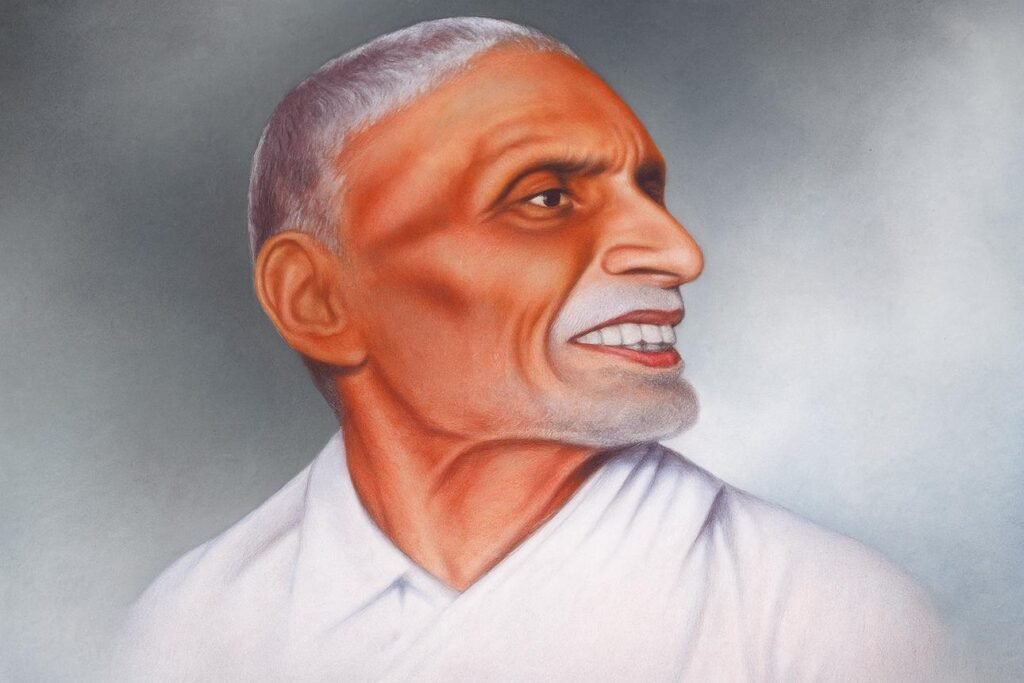
Personal Information
- Full Name: Pingali Venkayya
- Born: August 2, 1876
- Birthplace: Bhatlapenumarru village, Krishna district, Andhra Pradesh (then Madras Presidency, British India)
- Died: July 4, 1963 (aged 86)
- Place of Death: Vijayawada, Andhra Pradesh
- Nationality: Indian
- Known For: Designing the original version of India’s National Flag
- Occupation: Freedom fighter, agriculturist, geologist, educationist, linguist, and flag researcher
Early Life and Education
Pingali Venkayya was born into a Telugu family in Bhatlapenumarru village. He completed his early education in Machilipatnam and later studied in Colombo (present-day Sri Lanka).
He had a keen interest in agriculture, geology, mineralogy, languages, and history. Known for his intellectual curiosity, he reportedly learned several languages, including Telugu, English, Hindi, Urdu, and Japanese.
Service in the British Army
As a young man, Venkayya joined the British Indian Army and served during the Second Boer War (1899–1902) in South Africa.
During his stay in South Africa, he met Mahatma Gandhi, who would later become one of the greatest influences on his life. Their meeting inspired Venkayya to dedicate himself to India’s freedom movement.
Role in the Indian Freedom Struggle
After returning to India, Pingali Venkayya actively participated in the Indian National Congress.
He attended several Congress sessions and supported the Swadeshi Movement, encouraging Indians to use indigenous products instead of British goods.
He was not only a political activist but also an educator who promoted national awareness through lectures and writings.
Designer of India’s National Flag
Pingali Venkayya is best remembered as the designer of the Indian National Flag.
Research on Flags
Venkayya spent years studying the flags of different countries. His deep interest earned him the nickname:
“Jhanda Venkayya” (Flag Venkayya)
In 1916, he published a book titled “A National Flag for India,” in which he proposed several designs for an Indian flag.
Presentation to Mahatma Gandhi
In 1921, during the Indian National Congress session held at Bezawada (now Vijayawada), Pingali Venkayya presented a flag design to Mahatma Gandhi.
The original design featured:
- Red representing Hindus
- Green representing Muslims
Gandhi suggested adding:
- A white stripe to represent other communities and peace
- A spinning wheel (Charkha) in the center, symbolizing self-reliance and the Swadeshi movement
This became the basis for India’s national flag during the freedom movement.
Evolution into the Present National Flag
On July 22, 1947, the Constituent Assembly adopted the present National Flag of India.
The final design retained the tricolour but replaced the spinning wheel with the Ashoka Chakra, a navy-blue wheel with 24 spokes taken from the Lion Capital of Ashoka.
Present Flag Colors
- Saffron: Courage and sacrifice
- White: Truth, peace, and honesty
- Green: Prosperity, growth, and faith
- Ashoka Chakra: Dharma (righteousness), justice, and continuous progress
Although the final version underwent modifications, Pingali Venkayya’s original concept formed its foundation.
Contributions Beyond the Flag
Pingali Venkayya made significant contributions in several fields.
Agriculture
He conducted research on cotton cultivation and promoted improved farming practices in Andhra Pradesh.
Geology
He studied mineral resources and worked on geological surveys.
Education
He taught at educational institutions and encouraged scientific thinking among students.
Languages
Venkayya was known for his interest in multiple languages and comparative studies.
Personal Life
Despite his immense contribution to the nation, Pingali Venkayya lived a modest life.
He never sought wealth or political power. In his later years, he faced financial difficulties and remained largely unrecognized.
Death
Pingali Venkayya passed away on July 4, 1963, in Vijayawada.
His death received little public attention at the time, but his legacy has since been widely acknowledged.
Honors and Recognition
- Recognized as the designer of India’s National Flag.
- Commemorated through statues, educational institutions, and memorials in Andhra Pradesh.
- The Government of India has issued a commemorative postage stamp in his honor.
- His birth anniversary, August 2, is observed in many parts of the country to remember his contribution.
- Several schools, roads, and public institutions have been named after him.
Interesting Facts
- He was popularly known as “Jhanda Venkayya.”
- He spent years researching the national flags of various countries before designing India’s flag.
- His book “A National Flag for India” was published in 1916.
- He first presented his flag design to Mahatma Gandhi in 1921 at the Congress session in Bezawada (Vijayawada).
- The original flag featured the Charkha, which was replaced by the Ashoka Chakra in 1947.
- He served in the British Indian Army during the Second Boer War before joining India’s freedom movement.
- He also made contributions to agriculture and geology.
Legacy
Pingali Venkayya’s contribution extends beyond designing a flag. He gave India a powerful national symbol that united people across regions, religions, and cultures during the freedom struggle. Today, every time the Indian tricolour is hoisted, it stands as a tribute to his vision, patriotism, and lifelong dedication to the nation.

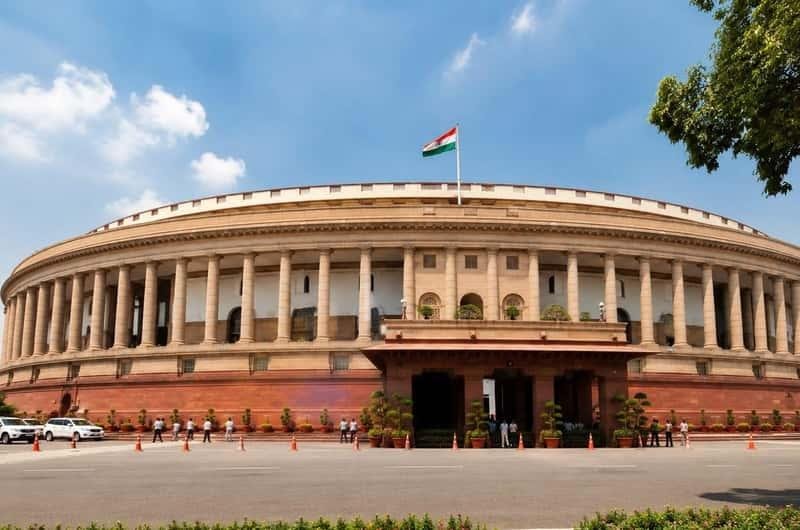
Women’s Reservation Bill Fails in Lok Sabha; Rahul Gandhi Slams Centre, Credits Opposition Unity
The Lok Sabha rejected the women’s reservation bill on Friday which led to intense political reactions because Leader of the Opposition Rahul Gandhi accused the government of trying to damage the Constitution through its efforts to